

This guide explains what the law does, how to request removal, and what to do if a platform does not respond. It is general information, not legal advice. The Act has specific definitions and exceptions, and state protections may differ.
What the TAKE IT DOWN Act requires
The Act applies to certain public-facing websites, apps, and online services that provide a forum for user-generated content or regularly host or make available nonconsensual intimate images. Covered services may include social media, messaging, image-sharing, video-sharing, and some gaming platforms. It does not automatically cover every site or service.
A covered platform must explain its process in plain language and let an identifiable person, or an authorized representative, request removal. A valid request needs enough information to locate the image, a brief statement explaining the person’s good-faith belief that it was shared without consent, and required identifying and contact information. The process is not limited to people who hold an account on the platform.
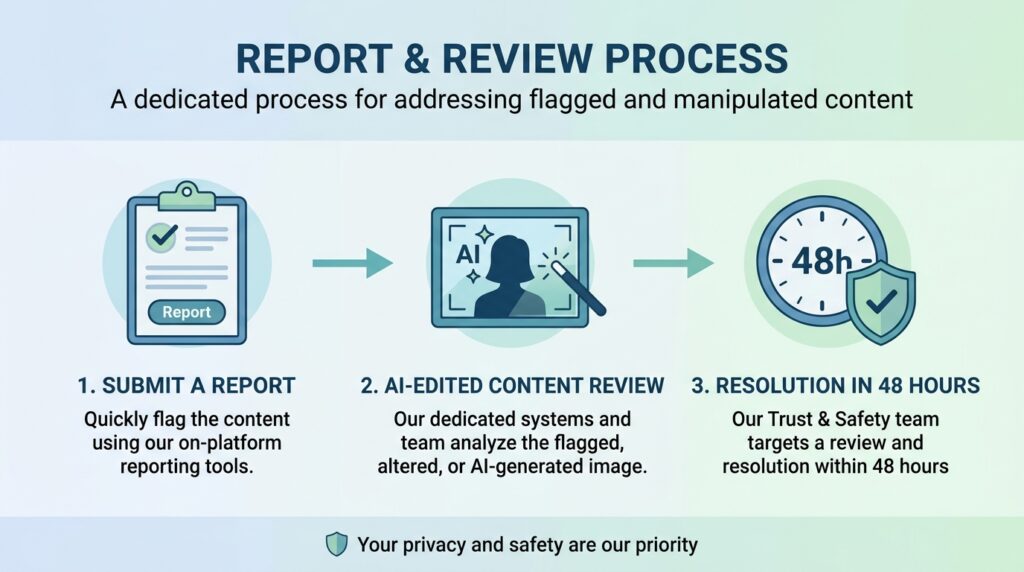
After receiving a valid request, the platform must remove the image as soon as possible and no later than 48 hours. It must also make reasonable efforts to find and remove known identical copies on its service. This does not guarantee that every edited version or copy on another service will disappear. If the image appears on several platforms, submit a separate request to each one.
Which images may be covered
The Act covers certain authentic intimate images as well as digital forgeries, including images created or altered using artificial intelligence or other technology. A deepfake is not automatically covered just because it is embarrassing or false. The person must be identifiable, and the image must meet the law’s definition of an intimate visual depiction. That definition is narrower than any private or suggestive picture.
The Act also created separate federal criminal prohibitions for certain intentional publications and threats. Those provisions have specific elements and exceptions. The platform-removal process is separate from any investigation or legal claim against the person who shared the image. For more detail, see the Congressional Research Service summary of the TAKE IT DOWN Act.
How to request removal
1. Record where the image appears
Note the platform, the page or post address, the account name, and when you found the content. Keep relevant messages, threats, and report confirmations. If safe and lawful, preserve screenshots showing the post and its context. Do not repost or forward the image to friends or public forums to seek help.
If the image involves someone who was under 18 when it was created, do not download, forward, or copy it. Contact a trusted adult, lawyer, or child-safety organization for safe reporting guidance. Do not send the image by email or chat unless an official process specifically directs you to do so.
2. Use the platform’s removal process

Look for the platform’s privacy, safety, or nonconsensual-image reporting option. State that the image is intimate and was shared without consent. Provide enough detail to locate it and follow the platform’s instructions for identifying yourself or an authorized representative. Ask for a confirmation number or other record.
Submit a separate request for each platform where the image appears. Include a direct location when possible, even if the content is in a message, comment, or livestream. A report to the account owner, an app store, or a search engine may not count as a valid request to the platform hosting the image.
3. Keep a record of the response
Record when the platform received your request and how it responded. Keep the confirmation number, any explanation for a denial, and a note about whether the image or known identical copies remain visible. The 48-hour period begins when the platform receives a valid request, not when you first discover the post.
What to do if the platform does not act
The FTC enforces the platform requirements, but it does not remove images for individuals. If a covered platform has no working request process or fails to remove an image within the required period after receiving a valid request, you can report the platform to the FTC. Include the platform name, when and how you made the request, and its response. Focus your report on the platform’s compliance, not on reposting the intimate image.
If someone is threatening, blackmailing, or stalking you, or you face an immediate safety risk, consider contacting local law enforcement or a lawyer. You can also submit information through the FBI tip line. Explain what happened and where the content appears. Do not engage with threats if that could put you at greater risk.
For images or videos taken when the person was under 18, the National Center for Missing & Exploited Children offers its free Take It Down service. It creates a digital fingerprint, called a hash, on the person’s device, so the image itself does not need to be sent to NCMEC. Participating platforms can use the hash to find and block matching content. This is one support option, not a substitute for emergency help or legal advice.
Know the limits and consider legal advice

The 48-hour deadline does not promise that every version of an image will be erased from the internet. The platform must make reasonable efforts to find known identical copies on its own service. A cropped, edited, or newly generated version may need a separate report, and another service may need its own request.
The FTC process concerns whether a covered platform follows the law. It is not a request for the FTC to investigate the person who posted the image or award compensation. Federal criminal provisions and state civil or criminal laws may offer other options, depending on the facts and location. A lawyer can help assess deadlines, evidence, safety planning, and possible claims.
Your Legal Lady also covers legal issues women may face and AI in legal dispute resolution. If you are dealing with image abuse, you deserve clear information and support. Take one step at a time: record where the image appears, request removal from each covered platform, keep your case numbers, and seek qualified help when needed.